
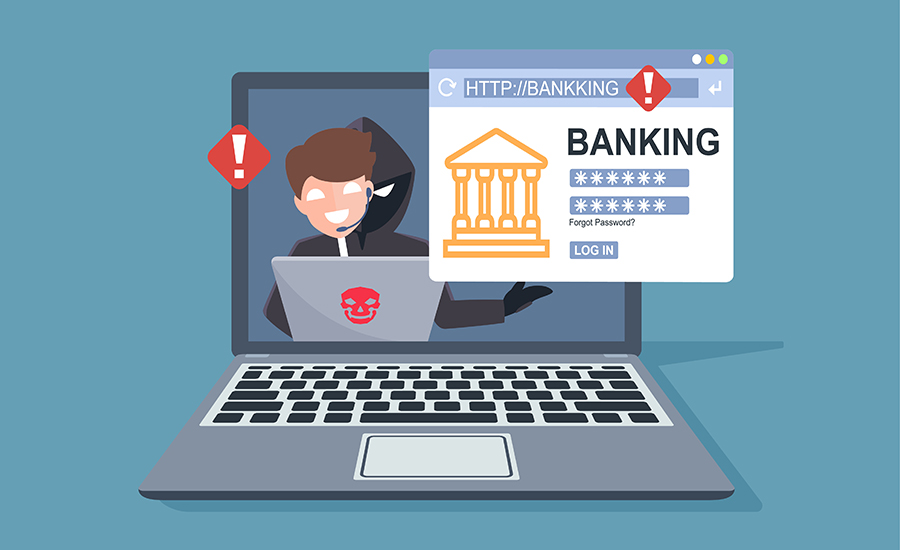
Every bank has customers to serve, and “customers” to stop—and credit unions are no different (except we call them members). At Maps, we aim to give our members everything they need to reach their financial goals, but we also spend a lot of time protecting what they’ve built. Behind the friendly service and digital tools is a constant effort to keep out fraudsters (a.k.a., the “unwanted customers” ).
Collectively, before the end of 2025, financial institutions are expected to spend $21.1 billion on fraud detection and prevention—and that number is projected to grow to $39.1 billion by 2030. But, all told, it’s a worthy investment. For every dollar lost to fraud, North American financial institutions incur an additional $4.41 in related costs (such as legal fees and recovery efforts).
From a member’s perspective, the extra security steps—like multifactor authentication, verification codes, and pop-up fraud alerts—may feel like annoying obstacles. Still, every one of those steps is a deliberate choice to prioritize your security.
Meet the Unwanted “Customer”
Every day, we see more attempts at account takeovers, identity theft, and phishing schemes designed to fool members into sharing sensitive information. But fraud evolves quickly, and advances in AI have made it even easier for scammers to level up their tactics.
Their sophisticated scams—aimed at both businesses and individual consumers—include everything from fake payment requests and faux criminal investigations to slick, AI-generated investment pitches. Scammers craft convincing texts, spoofed calls that look (on the caller ID) like they’re coming from Maps, and emails built to steal personal details or logins. They switch strategies fast, too, which makes the fraud-prevention landscape all the more unpredictable. So, with all this constant shapeshifting, staying informed is more important than ever.
How Fraud Prevention Shapes Everyday Banking
Fraud can take many forms, including stolen credentials, phishing attempts, unusual transaction patterns, or attempts to exploit digital banking tools. Even if you never see these issues firsthand, the systems we use to detect them are always working in the background. These protocols and safeguards—like daily ATM withdrawal limits, codewords, transfer restrictions, and online banking holds—are tools meant to keep fraudsters from accessing accounts. They are designed to slow down criminals and catch suspicious behavior before losses occur.
The Balancing Act: Safety vs. Simplicity
Unsurprisingly, fraud prevention isn’t a single department—it’s part of everything we do. Our teams monitor activity in real time, respond to suspicious transactions, and continually update systems to outpace new threats.
We also train all of our employees (not just those who handle money) to recognize red flags, whether it’s a questionable withdrawal or a member being pressured by a scammer. And when fraud does happen, our focus shifts immediately to helping affected members recover quickly. It’s a constant, ever-evolving process because the bad actors trying to break in never stop adapting.
If all that sounds exhausting, it is. But for every transaction, there’s a chance someone is trying to manipulate it. And for every new service or technology designed to make your life easier, someone else is figuring out how to exploit it.
So, while the verification codes, alerts, or transfer limits might feel like unnecessary red tape, each measure is carefully designed to protect your money, your account, and the broader community.
The Real Price Tag of Fraud
Stopping fraud doesn’t just protect the institution—it protects the people who belong to it. When criminals gain access to funds or accounts, the impact ripples outward through investigations, refunds, monitoring, and system updates.
Even if you’re never personally affected, the cost of fighting fraud is shared throughout the financial system. It’s work that keeps everyone safer, but it also pulls resources away from things like product improvements, lower fees, and community programs.
How You Can Help
Teamwork is our best defense—especially since we’re member-owned and our earnings go back to members through better rates, lower fees, and community programs. That’s a big part of why we’re so focused on fraud-prevention education. Our members help more than they realize just by staying alert and saying something when something feels off. When you stay vigilant, you’re not just protecting yourself—you’re helping protect the entire Maps community. These little habits also go a long way:
- Be skeptical of urgent or unsolicited messages asking for personal information.
- Use strong, unique passwords and enable multifactor authentication when possible.
- Enable biometric locks or MFA on smart devices and be wary of public Wi-Fi.
- Go paperless with e-statements and secure physical documents and identifying records (like your Social Security Card and passport).
- Shred documents containing sensitive information before discarding them.
- Review your accounts regularly for unfamiliar activity.
- Report anything suspicious right away—whether it’s an odd email, text, or transaction.
- Stay educated on threats by paying attention to fraud detection advice and educational campaigns. Keep yourself informed about the latest scams and tactics used by fraudsters.
We know our members want banking that’s fast, digital, and convenient—we want that too. But fraud prevention adds an unavoidable layer of complexity. And the goal isn’t to make banking harder; it’s to make it safer.
Scammers are not part of the community we serve, but we can’t ignore them. Every time we stop a fraudulent transaction or prevent a member from being scammed, it’s one more way we’re protecting what matters most: your trust. And that’s a job we take personally.
Want more fraud prevention tips?
- Read about the 8 fraud myths that put your money at risk.
- Get some tips to protect yourself while scrolling through social media.
- Learn how to give yourself a cybersecurity makeover.