
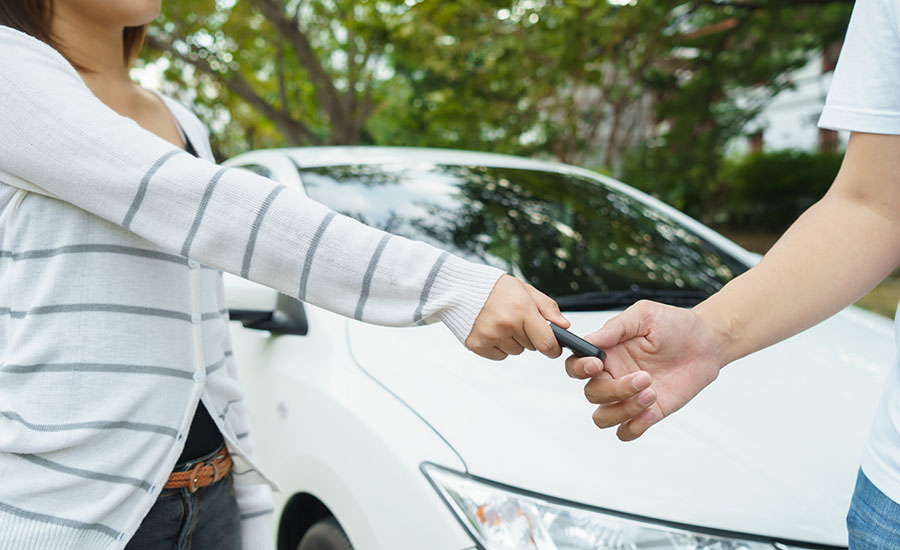
You probably wouldn’t think twice about loaning a friend your phone charger or jumper cables. But what about your car?
The moment another person gets behind your wheel, the question of insurance and liability gets a little more complicated—especially if your friend gets into an accident.
When it comes to liability, you might assume that the person behind the wheel is automatically responsible. However, in Oregon, car insurance typically follows the vehicle, not the driver. That means if you lend your car to a friend and they cause an accident, your insurance may take the first hit. And depending on the situation, those consequences could extend well beyond a damaged bumper.
Whose Insurance Covers Damages?
Generally speaking, auto insurance is tied to the vehicle itself, not the driver. So, when you loan a friend your car, they are typically covered by your policy. In the insurance world, this concept is often referred to as “permissive use,” meaning you gave someone permission to drive your vehicle.
If your friend causes an accident while driving your car, your insurance policy will often be considered the primary coverage—even if the driver carries their own insurance. So, your insurance may be on the hook for property damage, injuries to other drivers or passengers, legal costs, and collision damage to your own vehicle (if you carry collision coverage).
In Oregon, lending someone your vehicle does not automatically make you wholly liable for every accident they cause. However, your policy may still take the initial financial hit through claims, deductibles, or higher premiums. Serious accidents can also exceed policy limits quickly, especially if you carry only the minimum required liability coverage.
Of course, liability can become even more complicated if you knowingly lend your car to someone who is unlicensed, impaired, reckless, or otherwise unsafe to drive.
What Happens After an Accident?
After an accident involving a borrowed vehicle, both you and your friend should promptly contact your insurance providers. Because insurance generally follows the car, your policy will likely handle the claim first.
If the damages from your friend’s accident exceed your policy limits, their insurance may help cover additional costs, like certain medical expenses or liability claims. But that depends on the circumstances of the accident and the details of both insurance policies.
There are, however, some important exceptions, and insurance situations can become more complicated if:
- The driver was unlicensed or impaired.
- The car was taken without permission.
- The driver was excluded from your policy.
- The vehicle was being used for business or commercial activity.
- You regularly lend the vehicle to someone who is not listed on your policy.
Some policies specifically exclude certain drivers or situations. Others may limit coverage for household members who frequently use the vehicle but are not named on the policy.
To avoid these complications, check your policy or ask your provider to clarify what your policy covers before handing over your keys.
What About Household Members?
Insurance companies generally expect all licensed drivers in your household to be listed on your policy. So, teen drivers, adult children, partners, and even roommates who live with you could affect how coverage applies.
And, while Oregon law does not require every household driver to be listed on your policy, failing to disclose them could lead to coverage disputes, claim denials, rescissions, non-renewals, or cancellations, depending on the policy language and circumstances.
In other words, if an unlisted driver who lives in your home gets into an accident while driving your vehicle, your insurer may dispute coverage, limit certain claims, or even cancel or refuse to renew your policy.
If Your Friend Gets a Ticket, Who Pays?
Unlike accident claims, traffic tickets usually follow the driver, not the vehicle owner. So, if your friend gets a speeding ticket while borrowing your car, they are typically responsible for paying the citation.
That said, some violations are tied directly to the vehicle itself. Parking tickets, toll violations, expired registration notices, and photo-enforced citations (like red-light or speed camera tickets) are often sent to the vehicle’s registered owner first.
So, even if you weren’t the person driving, it may fall on you to respond to the notice, dispute the citation, or identify who was behind the wheel at the time.
Before You Lend Your Car
Before handing over your keys to a friend or family member, make sure you trust the person behind the wheel and understand how your insurance policy applies if something goes wrong.
1. Ask if They are Licensed and Insured
It may feel awkward, especially with friends and family, but lending someone your car is not like lending them a lawnmower. It’s essentially a temporary extension of your insurance coverage and financial responsibility.
What’s more, lending your car to someone with a poor driving history, DUIs, suspended licenses, or outstanding legal issues could create serious insurance and liability concerns. If you knowingly allow someone who may be unsafe or legally prohibited from driving to use your vehicle, insurance companies and courts may view that decision differently than a routine loan between responsible drivers.
2. Know the Reason They Are Borrowing the Car
Not all vehicle use is treated the same by insurance companies. If someone plans to use your car for rideshare or delivery work—like Uber, Lyft, DoorDash, or Instacart—your personal auto policy may not fully cover the activity. Many insurers treat commercial driving differently, which can create unexpected coverage gaps if an accident occurs.
3. Review Your Insurance Policy
Not all insurance policies handle borrowed vehicles the same way. Some policies place limits on permissive drivers, while others may exclude certain people entirely. It’s especially important to understand how your policy treats household members, frequent borrowers, or drivers who are not specifically listed on your coverage.
If you are unsure what your policy allows, contact your insurance provider before lending out your vehicle.
4. Consider the Potential Fallout
An accident involving your vehicle could still leave you responsible for deductibles or higher insurance premiums—even if insurance covers most of the damage. And if there are serious injuries or extensive property damage involved, the resulting expenses may quickly exceed your policy limits.
So, before lending your car, consider whether you would be financially prepared to handle the fallout if something went wrong.
5. Consider Adding Regular Drivers
If a friend or family member regularly borrows your car, it’s best to add them to your policy. While “regular use” can vary by insurer, repeated or routine use of your vehicle for work, school, errands, or everyday transportation could shift someone from an occasional permissive driver to a frequent driver in the eyes of your insurance company.
If that “frequent driver” is not listed on your policy and gets into an accident, your insurer could dispute coverage, limit certain claims, or even cancel or refuse to renew the policy.
Lending someone your car may feel like a small favor, but it can carry bigger financial and insurance implications than many drivers realize. From accident claims and rising premiums to coverage disputes and liability concerns, a lot can happen once someone else gets behind the wheel.
That doesn’t mean you should never lend out your vehicle. It just means it’s worth understanding how your insurance works, who is driving your car, and what risks you may be taking on before you hand over the keys.