
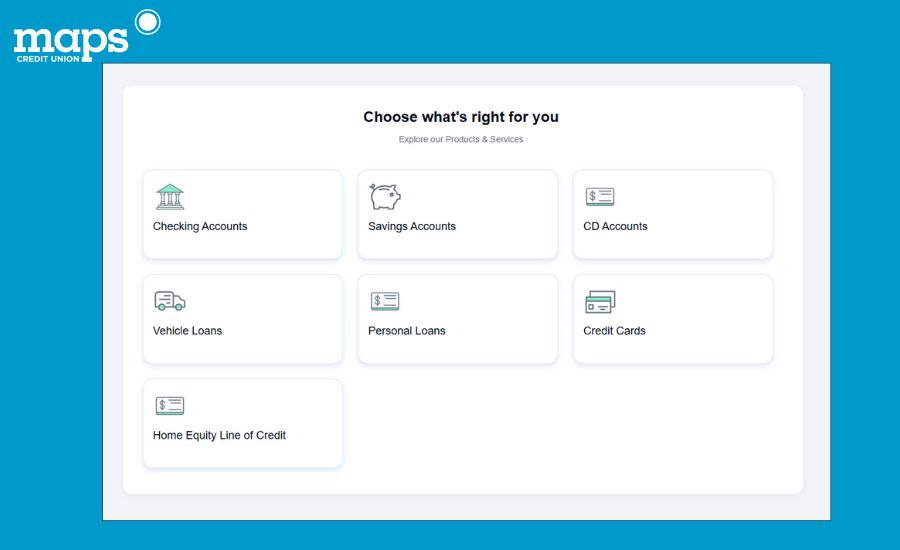
You already know a bank or credit union is one of the safest places to keep your money,1 but choosing the right account isn’t always straightforward. Once you start comparing account options, the list can feel overwhelming. Checking, savings, money markets, CDs—what’s the real difference, and how do you know which one to use? To help you find what works best for your money and your goals, here are the most common account types and how people typically use them.
Checking Accounts: Your Everyday Workhorse
What they’re for: Daily spending and bill paying.
For most people, a checking account is where we deposit our paychecks. It’s the account we use to pay for groceries, rent, subscriptions, and everything in between. Most checking accounts come with a debit card, paper checks (yes, some people still use them), and an online bill pay option.
Checking accounts are best used when you need to:
- Pay bills or make everyday purchases
- Set up direct deposit for your paycheck
- Access cash through ATMs
- Move money in and out frequently
Our Most Popular Checking Account
Maps members overwhelmingly choose our Free Community Checking Account because it offers no monthly maintenance fees, no minimum balance requirement, and no limits on checks. Our President’s Club Checking is also popular because it offers extra perks and dividends on higher balances.
Savings Accounts: The Safe Place for Savings Goals
What they’re for: Holding money you don’t plan to spend right away.
Savings accounts are designed to help you set money aside and separate the money you’re saving from the money you use every day. The right account may even earn you a little interest. No matter your age or goals, savings accounts are ideal for emergency funds, long-term plans, and near-term goals.
Savings accounts are best used for:
- An emergency fund
- Setting aside funds for a vacation
- Saving for holiday spending
- Collecting funds for a down payment on a home or car
- A fund for covering planned, large expenses like annual insurance premiums
- A cushion to prevent overdrafts
Our Most Popular Savings Account
Since it is required for membership, our most popular savings option is the Membership Savings Account. With just a $5 minimum opening balance, it establishes your share in the credit union and gives you a simple, low-pressure place to keep emergency funds or short-term savings.
Our members also love the Member Rewards Savings Account, which is free to all members and offers our highest savings rate. You can’t make deposits directly into your Member Rewards Savings, but you can build your balance through special promotional bonuses, Round Up, and our Cashback Credit Card.
Money Market Accounts: A Hybrid Option
What they’re for: Earning more interest while keeping some flexibility.
Money market accounts sit somewhere between checking and savings. They often pay higher interest than regular savings accounts and may include check-writing or debit card access.
Money market accounts are best used when you want to:
- Earn a better rate on a larger balance
- Keep savings accessible, but not too accessible
- Park money temporarily before a big expense
Our Most Popular Money Market Account
The most popular Maps money market account is our Indexed Money Market Account, which requires no minimum deposit, has no early withdrawal penalties, and earns a higher interest on balances as low as $5,000. Both the Indexed Money Market Account and our Premium Money Market Account allow you to earn interest while still being able to access your money whenever you need it.
Certificates of Deposit (CDs): Set It and Forget It Savings
What they’re for: Locking in savings at a guaranteed rate for a fixed period.
With a CD, you agree to leave your money untouched for a set term, typically one to three months, though some may stretch several years. In return, you earn a higher (and more predictable) interest rate, but pulling the money out early usually means paying a penalty.
CDs are best used when:
- You don’t need immediate access to the money
- You want a guaranteed return
- You’re okay planning ahead
Our Most Popular CD
The most popular Maps certificate is the 12 Months First Step CD, a certificate of deposit designed exclusively for our youth members. It’s a popular choice for parents and grandparents hoping to jumpstart savings for their little loved ones. It requires a $100 minimum deposit, but kids can boost their savings over time with additional ($10 minimum) deposits. That said, as with all CDs, there are early withdrawal penalties. So, a CD is only the best option if you plan to leave the money alone.
Individual Retirement Accounts (IRAs) and Educational Savings Accounts (ESAs): Long-Term Planning Tools
What they’re for: Saving specifically for retirement or education.
Many banks and credit unions offer IRAs and ESAs, as do investment firms. At Maps, we offer Traditional or Roth IRAs, Coverdell ESAs, or SEPs. Each comes with different tax advantages, but all are designed to help your money grow over the long haul.
IRAs and ESAs are best used when you’re:
- Planning for retirement beyond a workplace plan
- Saving for a college education
- Looking for tax advantages on long-term savings
- Comfortable leaving money untouched for years
Our Most Popular IRA Option
The “best” IRA depends on your goals, timeline, and tax situation. When choosing one, pay attention to contribution limits and withdrawal rules. Retirement accounts and education savings accounts are powerful tools, but they’re not meant for short-term needs.
Specialty Accounts
Depending on where you bank, you may also come across specialty accounts designed for specific situations or life stages. Many credit unions and banks offer these niche options to meet particular member needs. At Maps, for example, we offer a number of Youth Savings options to help kids and teens learn how to save and manage money long before their first paycheck.
We also offer a Summer Savers Account for teachers and other school employees who may not earn a regular salary during the summer months. These types of accounts aren’t right for everyone, but they can be especially helpful when they align with how you earn, save, or plan for the year ahead.
Choosing the Right Mix
You don’t have to pick just one account. In fact, most people use several accounts at once. A popular mix for Maps members is:
- A Free Community Checking (with Round Up enabled) for everyday spending,
- A Member Rewards Savings (to collect dividends at our highest rate),
- A Membership Savings for emergencies and short-term goals,
- And, a money market account for long-term savings goals.
The right setup for you depends on how you earn, spend, and save. As you explore your options, remember that accounts are tools. When they’re set up well, they make managing money easier and less stressful. When they’re not, they can quietly cost you in fees or missed opportunities. So, take a little time to understand what each account does, and ask questions if you aren’t sure. That kind of clarity will put you in control of where your money lives and how it works for you.
1 This credit union is federally insured by the National Credit Union Administration (NCUA).